More Time With AI Is Not the Answer
Peter Steinberger’s TED Talk made me think. His conclusion made me push back.
Peter Steinberger gave one of the most honest TED Talks I’ve seen in a while.
He sold his company. Felt nothing. Three years of therapy, two countries, no reason to get out of bed. And then – an AI agent gave him back his spark.
I believe him. That story is real.
His conclusion, though, is where I get off the train.
„What we need in the future is more people spending more time with AI.“
Here’s what I think he actually showed: we need some people – the right people – going deep. An AI agent that detects a tumor before any radiologist catches it. A system that reacts to black ice on a highway faster than human reflexes ever could. Those breakthroughs don’t come from everyone spending more hours with a chatbot. They come from specialists who go all in.
That’s a fundamentally different prescription than asking society to collectively tilt its face further toward the screen.
And the screen part matters. Because we’re not starting from a neutral baseline.
Loneliness was declared a public health epidemic by the U.S. Surgeon General in 2023. Social isolation carries mortality risks comparable to smoking 15 cigarettes a day. We are already, structurally, more disconnected than any generation in recent history.
Steinberger openly talks about his relationship with his AI agent — a relationship that feels like friendship. He’s describing something meaningful to him, and I won’t dismiss that. But I’ll ask the obvious question: if a burnt-out founder in Vienna finds more genuine connection with an algorithm than with the people around him, what does that say about the state of those human connections, and what should we actually be fixing?
The answer probably isn’t: everyone else should have a closer relationship with their AI agent too.
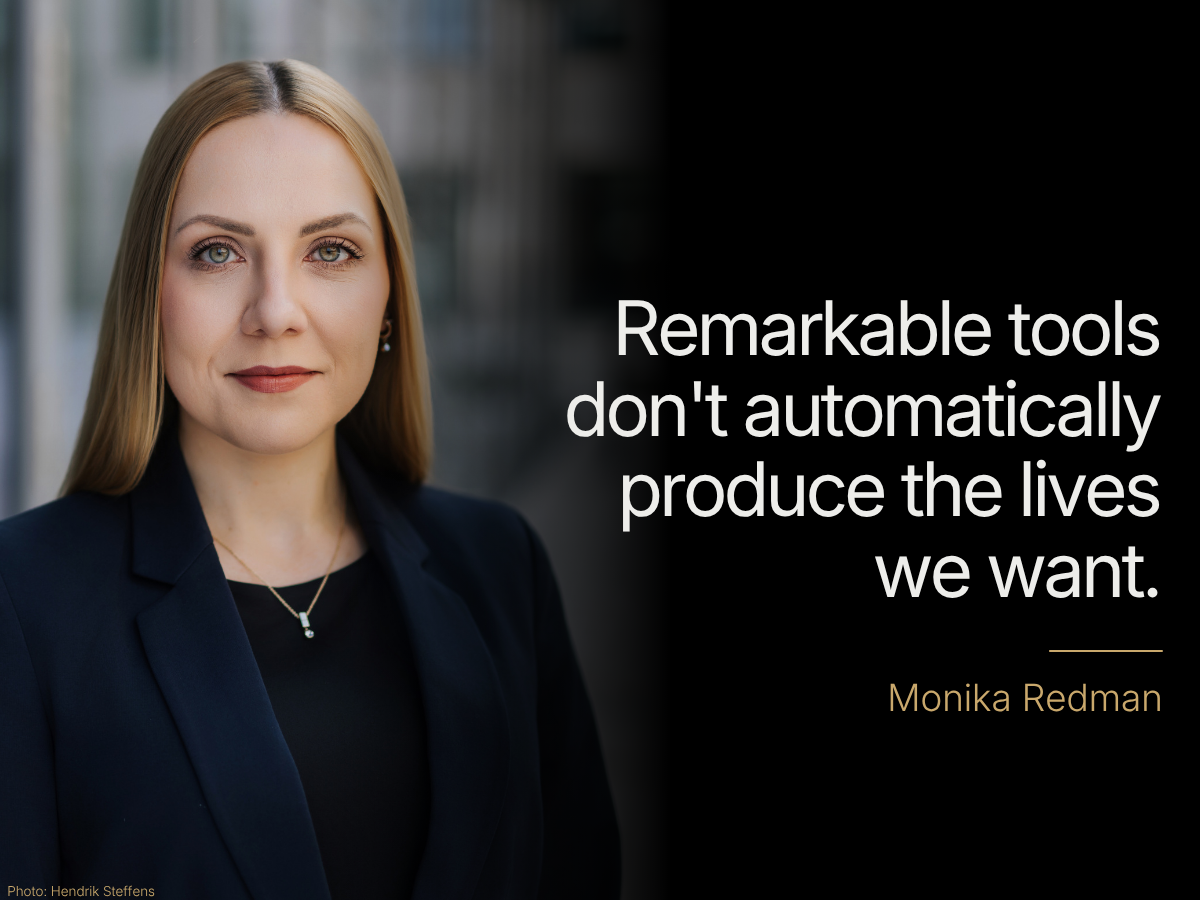
An AI that brews beer via Bluetooth, navigates Marrakesh, and improvises features it was never programmed for – that’s remarkable. Genuinely. But remarkable tools don’t automatically produce the lives we want. We’ve had smartphones for 20 years. They once were remarkable too. Like social media. And we’ve spent the last decade untangling what that did to us.
The real transformation Steinberger describes is access. Who gets to build things. That I agree with completely and it matters enormously. But access and immersion are not the same thing.
More time with AI, as a cultural goal, optimizes for the wrong variable. The variable worth optimizing is what people do with the time AI frees up. Whether they spend it in front of another screen, or with each other.
Steinberger’s spark came back. I’m glad it did.
I just think the spark he was missing had less to do with AI – and more to do with having something worth building again. With people who cared.
That’s not a technology problem.
Where’s your line between useful and substitute?
Disclaimer: This reflects my personal opinion and has no relation to my current employer or previous employers.